Responding to the Proliferation of Wildfire Events
With scores of Wildfires blazing across the U.S., Insurers can strengthen their ability to assess exposures and manage claims
At any point in time during the peak wildfire season, there can be as many as 100 or more active wildfire events across the U.S. alone, along with even more in Canada, Australia, South America and Europe.
For large property insurance companies, staying on top of wildfire risks to their commercial and residential portfolios, as well as a groundswell of potential claims, calls for the ability to track and monitor multiple major catastrophic events unfolding simultaneously.
Consider the present wildfire situation in the U.S. as reported by the National Interagency Fire Center (NIFC). In the U.S. alone, there are currently 75 large active fires being managed with full suppression strategies with more than 26,000 wildland firefighters working to suppress them.
The states currently reporting large fires include Oregon, Idaho, Washington, California, Arizona, Montana, Wyoming, Colorado, Nevada, Florida, and Texas. Year to date in 2024, nearly 30,000 wildfires have burned over 5 million acres. That’s more than a three-fold increase over the same time period in 2023 and about 1 million acres above the 10-year average number of acres burned.
Leveraging next-generation technology to track and manage wildfire risks
For insurers, the ability to assess and manage the impact on their portfolios of scores of simultaneous, evolving wildfire events calls for the use of sophisticated technology-based solutions. Claims executives now can assess actual and potential event impacts by leveraging systems that can store location, value, COPE and other critical data for hundreds or thousands of insured properties and then overlay real-time information on wildfire footprints and spread.
For example, using the latest generation of catastrophe risk management platforms, such as that offered by EigenRisk, Inc., an insurance claims executive can avoid the time-consuming work of finding footprints for every individual event, loading them, overlaying them to their portfolios, calculating potential exposures, reporting on them and then repeating the process incessantly as the event unfolds and updated footprints become available. Certainly, the prospect of repeating this exercise for 75 major wildfire events currently occurring across the U.S. otherwise would require huge investments in staff time and resources.
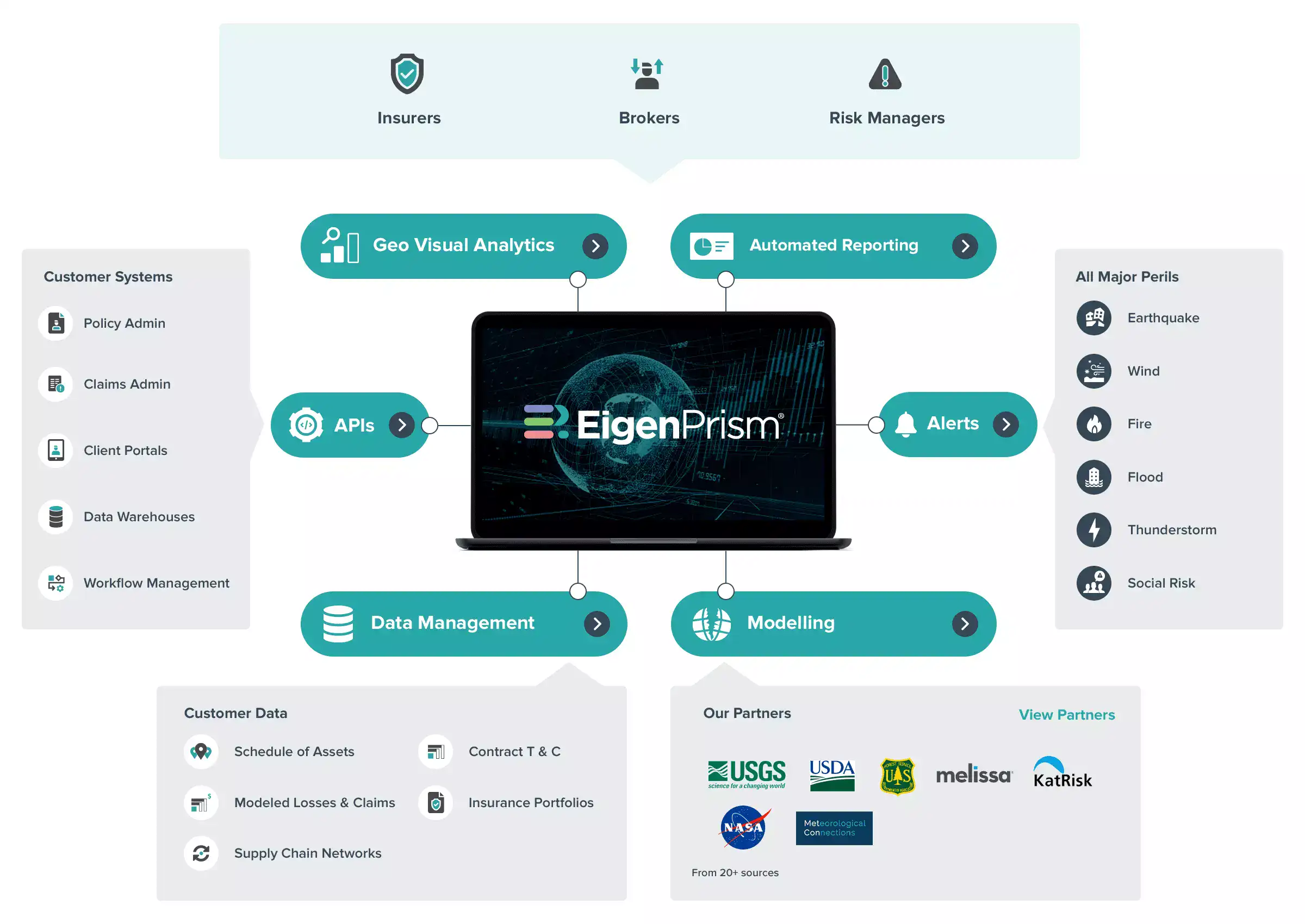
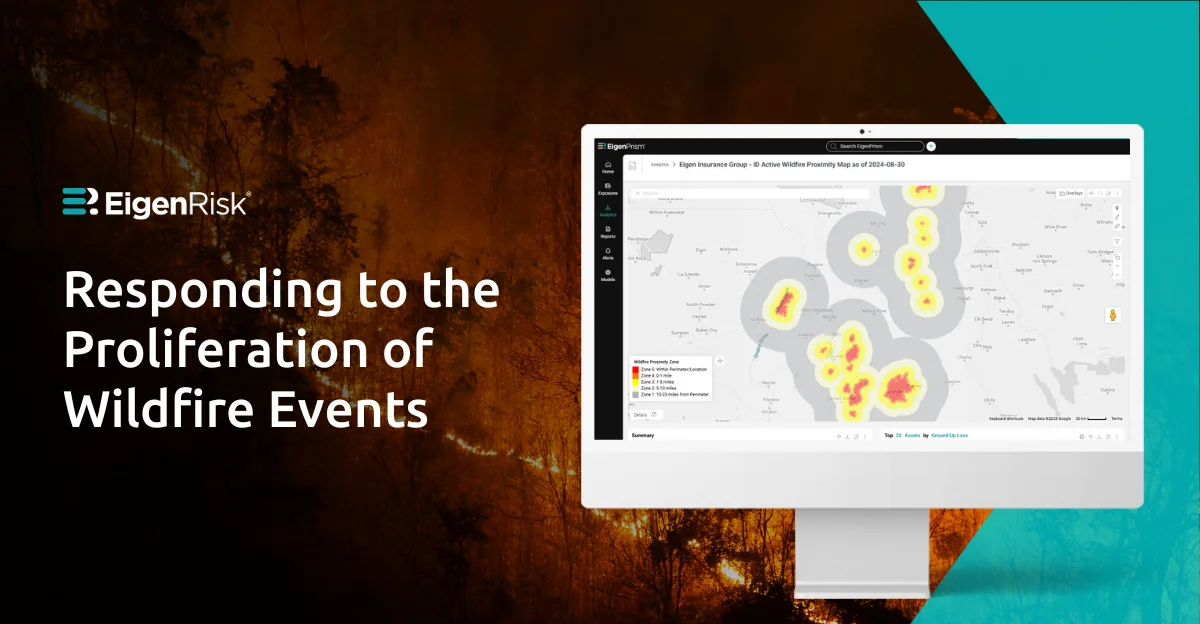
EigenRisk’s automated event response and notification solution instantly performs all these tasks, storing up-to-date portfolio information and overlaying current event footprints and generating instant updates. The system alerts claim management users of their exposures based on criteria they establish.
Thus, instead of trying to estimate dynamic individual and aggregated exposures repeatedly as events unfold, EigenRisk’s solution automatically alerts claims professionals when their portfolios may be affected and they need to take action. With a range of partners generating state-of-the art wildfire modeling, tracking and damage assessment capabilities, EigenRisk provides insurers the ability to manage wildfire exposure and loss events at scale.
Furthermore, even as scores of wildfires are unfolding throughout the U.S. and in other areas of the world, there’s a significant likelihood of a hurricane, tropical storm or other catastrophic loss event occurring elsewhere at the same time. In many instances, the same claims professionals trying to help their carriers navigate through the wildfire exposures will also have to address hurricane risks and other perils. That’s where the versatility of the EigenRisk platform can help drive efficiency across all aspects of property insurance catastrophe claims management.
To learn more about EigenRisk’s catastrophe risk management platform or arrange a demo, contact us: