Navigating Through the Proliferation of Property Risk Data
One-Stop Data Access a Game-Changer for Underwriters
Amid all the buzz about artificial intelligence (AI) and the promise it may represent for the property/casualty insurance industry, there’s another development with more immediate and far-reaching implications for catastrophe risk underwriting – the proliferation of data on climate and weather-related risks from public and private sources.
Today, insurers have access to unprecedented volumes of data to license, procure, purchase, and apply to property catastrophe underwriting, response and claim management decision-making than ever before. Unfortunately, however, even though insurers are actively engaged in obtaining these various data elements, many have yet been able to maximize their ability to retrieve, store, and access them in a timely and efficient manner.
Gumming up the works: Siloed data approaches yield inefficiencies, delays
As more new data feeds become available from multiple sources, many insurers have developed siloed access points for hazard, property and other data elements. At larger carriers, this approach has led to inefficient duplication between their various business units and teams. In fact, the larger the carrier, the more likely the presence of these types of inefficiencies.
As insurers struggle to understand the multi-step process involved in accessing the discrete and varied data elements they need for underwriting catastrophe risks, it takes them significantly longer than it should to bind an individual account. The extra time required for each underwriting decision limits the number of accounts that can be bound, creating a competitive disadvantage and inhibiting growth.
And while many data elements underwriters need to access are publicly available, the related workflow involves searching municipal databases for COPE data or tax assessor information, which requires more time. When these and other providers of critical underwriting data are siloed, delays in accessing data and performing related analytics can lead to opportunity costs, lost business and sub-optimal performance.
The advantages of a one-stop shop for catastrophe data
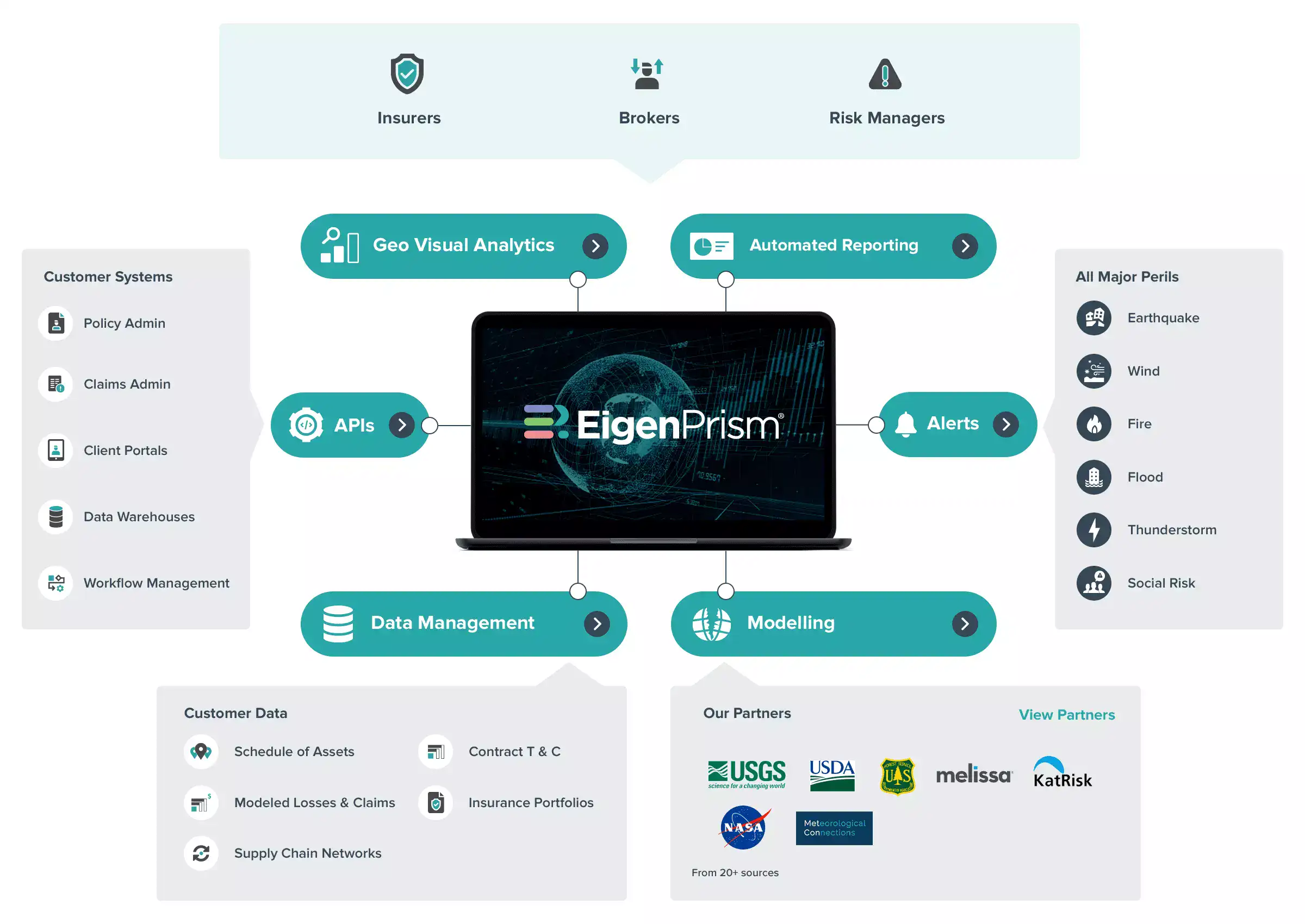
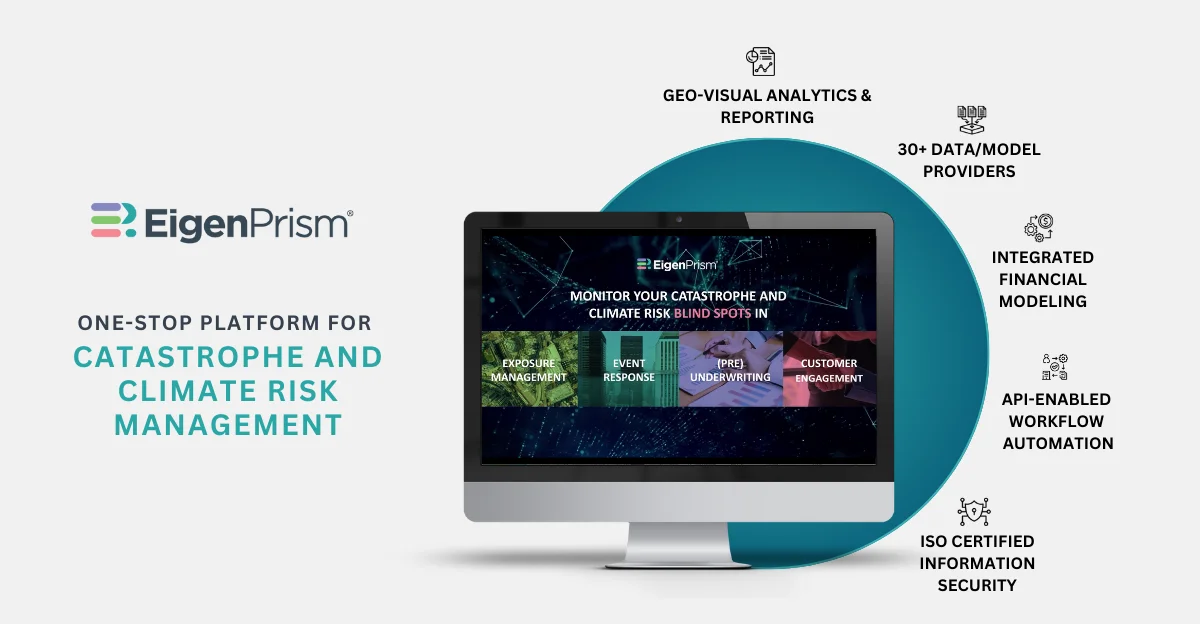
To access all the critical catastrophe risk data elements, they need whenever they need them, many insurers are now turning to the latest generation of catastrophe risk management platforms, such as that available from EigenRisk.
Using the EigenRisk platform access to the growing wealth of underwriting data can be just a few clicks away. A carrier’s entire universe of preferred hazard data, flood scores, wildfire risk indications, hurricane risk, geocodes, property characteristics, replacement costs, and more may be instantly accessible from partners with which you’re already familiar and working, in a single place. Underwriters and their teams can simply key in an address, latitude/longitude, or SOV, and EigenRisk’s platform can provide all the information required in a few clicks, from a single tool, on one screen.
To gain speed and efficiency in particularly competitive segments, insurers can use the EigenRisk platform for automated/digital underwriting for small commercial, residential homeowners, as well as certain middle market accounts. The use of straight-through underwriting driven by APIs and automation can be far more profitable for these business lines than relying on a physical underwriter to search for all the needed underwriting data and bind all the business.
For these lines, underwriters recognize the value of “low touch, high volume” approaches which don’t require a great deal of human interference to bind a high volume of business. To further speed these automated transactions, insurers typically create rules-based underwriting flows for situations where they can rapidly access all the information in a single place. Then, they create triggers and flags based on the information returned.
For example, triggers or flags might include a risk score that’s too high, a “weak” construction type, year built that’s too old, or lack of any data on roof age. Underwriting flags might also include adding new risks to an already concentrated area, going beyond your stated capacity by writing a new account in the territory, or a “live” or very recent catastrophe event occurring in the area.
Using the EigenRisk platform, underwriters not only can integrate all the required location-based information and physical risk (via APIs) directly into their policy administration system and workflow, but they can also check if their over-exposed in near real-time before binding accounts. As mentioned, they can create underwriting flags for those situations and get live event data to use for placing event moratoriums.
With the proliferation of new, rich and timely data sources, insurers should be able to make faster and better underwriting decisions. The use of a state-of-the-art catastrophe risk management platform, such as that available from EigenRisk, can turn all that potential into reality.
Contact Us
Learn how our one-stop platform EigenPrism can help you make better and timely decisions before, during, and after any event: