Enhancing Efficiency in Insurance Program Structure
Using the EigenRisk platform, brokers can save time, reduce errors, and gain deeper insights effortlessly.
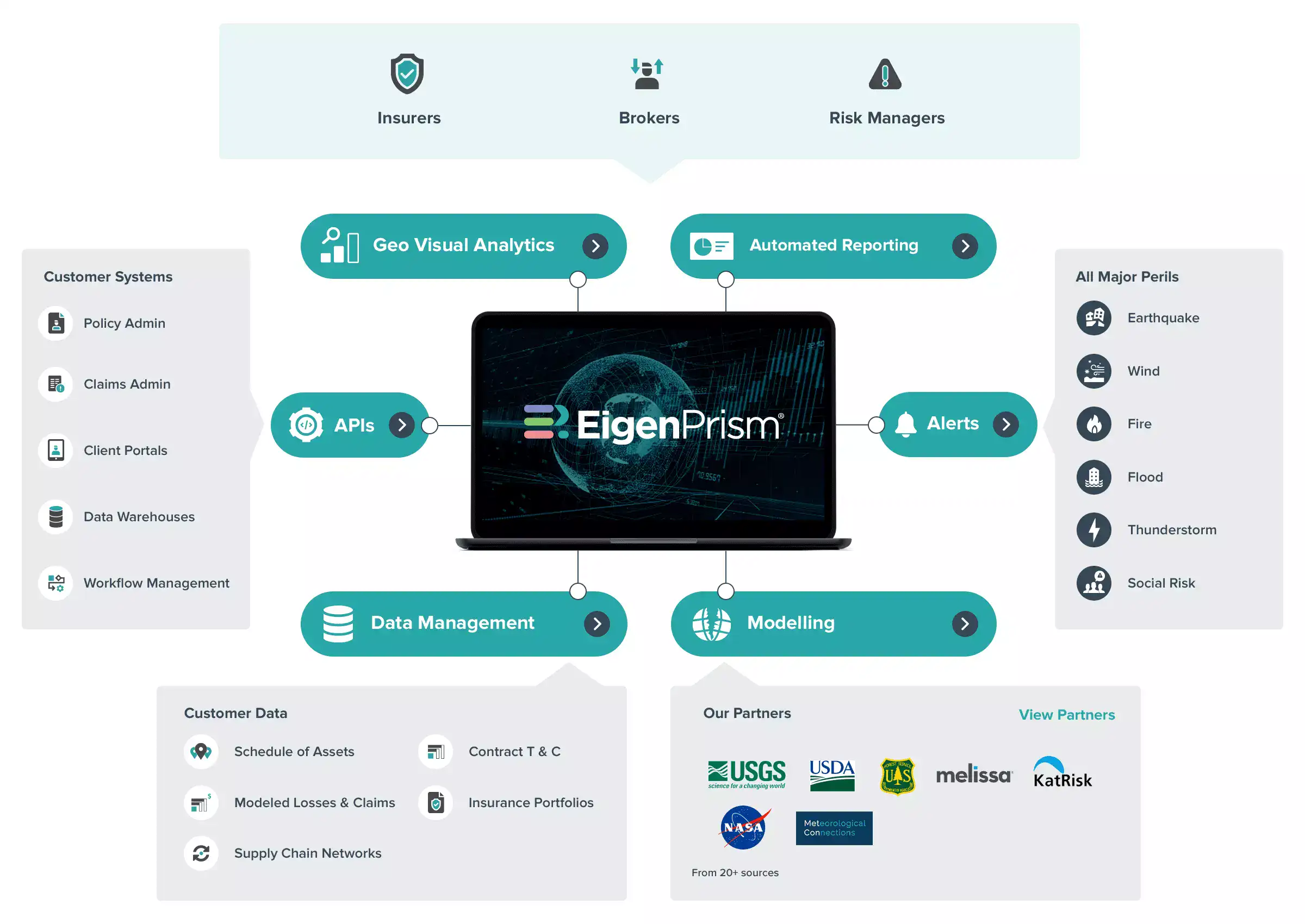
As insurance brokers look for new ways to leverage technology to gain efficiencies and achieve competitive advantages, many are taking a closer look at the varied capabilities offered by next-generation catastrophe risk management platforms.
In addition to helping them assess and manage clients’ exposures to catastrophic events, such as hurricanes, floods, wildfires, tornadoes, hail and other severe convective storms, platforms such as that offered by EigenRisk can help them drive speed and efficiencies into their program management and facilitate timely analytics in ways that can differentiate them from competitors.
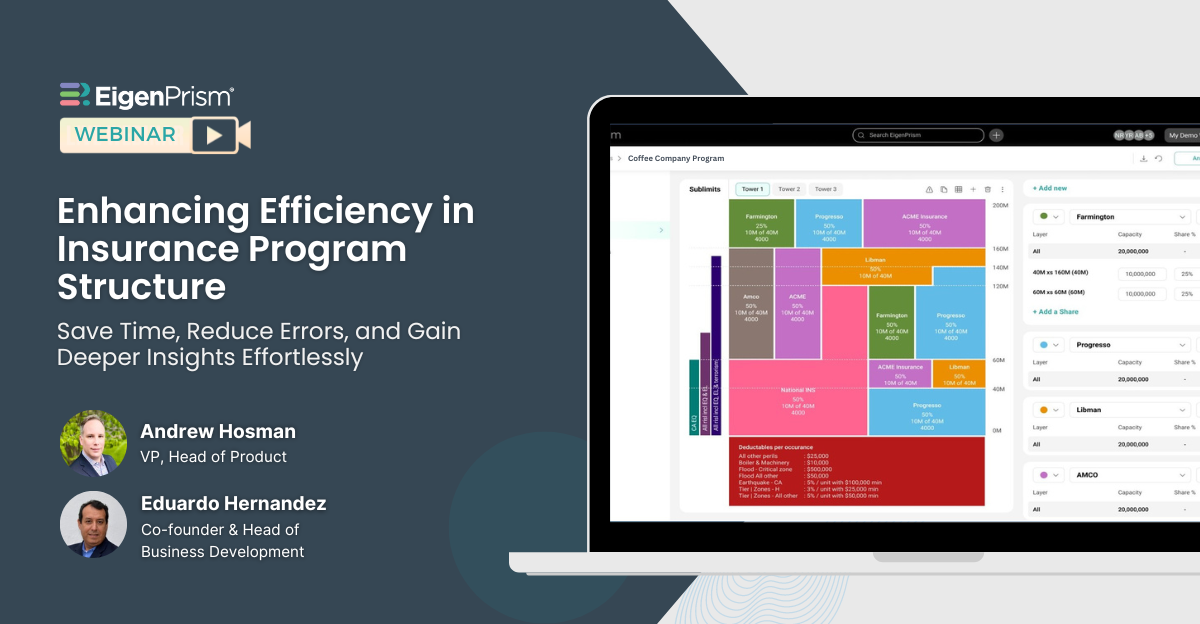
A new EigenRisk webinar featuring Andrew Hosman, vice president and head of Product and Eduardo Hernandez, co-founder & head of Business Development shows how brokers can use EigenRisk’s catastrophe risk management platform to save time and reduce errors in creating property program structures. The EigenRisk leaders also explained how brokers can use the platform’s capabilities to evaluate how effectively various program structures may respond to major loss events and quickly determine which of their clients might have claims above their deductibles when events occur.
As several leading commercial property insurers reduce capacity for specific perils and high-risk geographic areas and limit participation in individual programs, the broker’s task of finding and assembling appropriate coverages has become increasingly complex. As a result, the job of developing program structures is often more arduous and time-consuming.
Historically, brokers used spreadsheets such as Excel for building a program structure; however, the current realities of the commercial property market have made this approach inefficient. Today, with many insurers opting for smaller quota shares, building even a basic structure in Excel involves more time, expense and the increased likelihood of errors.
Hosman pointed out that the process of creating program structures in Excel encompasses multiple steps, including determining scale, counting and measuring scores of columns and rows, highlighting cells, merging data, keying in a large volume of information, and formatting, as well as correcting data entry errors and bad formulas, and double-checking the math.
Alternatively, using the EigenRisk platform streamlines the entire process, saving time in each step and reducing the likelihood of errors. Specifically, Hosman cited the following examples:
- Designing the program: In the webinar, Hosman described how using EigenRisk, brokers can establish limits and quickly create layers using attachment points. They can readily link to a prior or expiring program, eliminating the need to start from scratch, and track the performance of the previously placed program as a reference point. They can quickly apply total insured values (TIV), link to a set of exposures (SOV), stress test and validate their program structure against historical or realistic events.
- Assessing capacity: As brokers build out their program by designing layers one at a time, they effectively construct their towers in real time as each layer is entered. A built-in capacity checker lets brokers visualize where they may be under- or over-subscribed for individual layers and automatically adjusts and updates with the entry of additional data. Gaps are instantly highlighted so brokers can view segments of self-insured retention (SIR) or where additional coverage is needed to fill in capacity.
- Set default values for taxes, fees and commissions: Brokers can use built-in features to define default values for commission structures, taxes, and fees, reducing the need for additional data entry. They can use either a split or full view while entering data and quickly move across tabs with keystrokes or mouse. The EigenRisk platform automatically calculates taxes for admitted vs. non-admitted carriers and enables brokers to enter layer or participation premium, as well as brokerage/agency commissions. Brokers can make changes on the fly and calculate share, layer and total premium simply by entering a few numbers.
- Collaboration and oversight: The platform facilitates access by brokers in different locations who can collaborate to build the structure. Multiple versions of a program structure can be created to determine which best meets a client’s needs and objectives. As adjustments are made while the structures are constructed math is calculated real-time.
- Oversight and benchmarking: Brokers can track multiple quotes, access data over time and look across programs for insights, benchmarking and other helpful and timely comparisons. They can aggregate every program uploaded into the system, access individual program details, assess rate changes by layers, and review any variations in carrier participation and premium rates on a year-over-year basis. A new feature will enable brokers to delineate bound coverage versus quoted. Program structures can also be exported into Excel for sharing internally or externally with carriers and clients.
- Analytics: Hernandez discussed how brokers can quickly assess program structure by running what if scenarios for program, layer, share, and deductibles. This includes running worst-case scenarios and flow-through terms and conditions to determine where coverage erosion might be taking place. Thus, Hernandez explained, in building out the program, brokers can readily determine a client’s comfort level for risk retention.
- Timely event impact assessments: When loss events occur, brokers can conduct real-time program impact assessments and quickly alert clients about any likely effect on their coverages.
To view the entire EigenRisk webinar, click here. To learn more about leveraging the EigenRisk platform to create robust insurance program structures or to set up a pilot contact sales@eignerisk.com.