Before The Burst: Six Warning Signs Every Insurer Should Watch This Winter
Learn how real-time alerts help insurers get ahead of costly winter losses.
With many parts of the country currently navigating extreme cold weather conditions and pipe-freeze events causing hundreds of millions of dollars in losses each year, a new webinar presented by EigenRisk takes a closer look at this exposure, including properties and regions with greatest vulnerabilities.
Deepak Badoni, co-founder and president, EigenRisk, and Ashley Ballard, co-founder and CEO, Adiabat shared six warning signs of pipe-burst exposure. They also discussed how insurers can use state-of-the-art risk models to anticipate unfolding risks and alert policyholders in vulnerable areas to take necessary action to mitigate the risk.
Six Indicators of Pipe-Freeze Risk
- Temperature trends and extreme cold. In some areas of the U.S., it only takes a few hours of extreme cold to see pipe-freeze impacts. In addition, dramatic shifts in weather conditions, such as going from warmer to extremely cold conditions increase the risk of pipe freeze in contrast to having sustained periods of cold weather with only a slight temperature drop.
- Abnormal regional weather patterns. The U.S. South and Southwest that are historically unaccustomed to freezing cold weather often have different infrastructure, building practices and building codes that aren’t designed for extended sub-freezing temperatures. Ballard recalled the Texas freeze event of 2020-2021 involved extremely cold weather combined with power outages, which exacerbated the exposure.
- Surface conditions and wind gusts. Sustained wind affecting areas where buildings have exposed plumbing make them more vulnerable to freezing. In northern Florida and parts of Texas there’s exposed plumbing in attics and uninsulated crawl spaces. Notably, wind can infiltrate gaps, vents and poor seals and impact pipes – particularly on the windward side of the structure.
- Construction and building characteristics. Pipe-freeze vulnerability isn’t just about temperature, but also the duration of the cold, suddenness of temperature drop, building and infrastructure. This includes insulation quality, where the pipes are situated, directly impacts the vulnerability of any structures, not mention the plumbing design and pipe materials.
- Building age and pipe systems. In older buildings, pipe placement and pipe construction materials are key factors in pipe-freeze risk. Many older residential and commercial buildings don’t have just one type of pipe material; pipe systems may have been updated or replaced over time. For instance, galvanized steel pipe has its own mode of failure; in these systems, T-joints may not fail right away but could be at risk over time. Meanwhile, newer construction may have freeze protection measures, such as leakage-related automatic shutoffs and similar remedies installed to mitigate pipe freeze and water damage risk in homes, office buildings and other commercial facilities.
- Building occupancy. Vacant and unattended properties tend to be at higher risk for pipe-freeze and water damage loss events. For instance, college dormitories might be closed and vacated during winter breaks, and buildings being refurbished may be unattended in evenings or on weekends.
Understanding Adiabat’s Pipe-Freeze Risk Model
Ballard noted that Adiabat’s model delivers location-specific risk levels to give Adiabat’s clients early warnings of pipe-freeze risk potential at their properties. By indicating when and where pipe-freeze risk is likely to escalate, the model supports early, more targeted risk mitigation. Furthermore, Adiabat’s resources are moving towards building- and asset-level intelligence that incorporates construction details and operational context to help reduce uncertainty and improve decision-making.
As Ballard explained, the coldest temperatures don’t necessarily correlate with pipe freeze events. She cited an example where widespread weather conditions, had some areas of high pipe-freeze risk as well as areas of moderate or low risk despite similar or colder temperatures.
Straightforward Measures for Pipe-Freeze Risk Mitigation
With respect to pipe freeze, mitigation is straightforward, and preparedness measures can be activated quickly. Homeowners and asset managers can be advised to run water through pipes, turn up the heat, open cabinet doors, and watch for any damage that might occur.
Careful monitoring is often called for as well. Sometimes, pipes freeze, burst and cause damage, which may not be evident for a day to two weeks or longer. At that point, there may be mold damage and the need for costly mold remediation. Unfortunately, these situations can involve “a snowball of impacts” with escalating costs.
Ballard said Adiabat is also currently applying the model retrospectively to identify areas across the U.S. with persistently high risks for pipe freeze over the past 10 years and to uncover emerging trends in pipe freeze exposure.
Accessing Adiabat’s Resources on EigenPrism
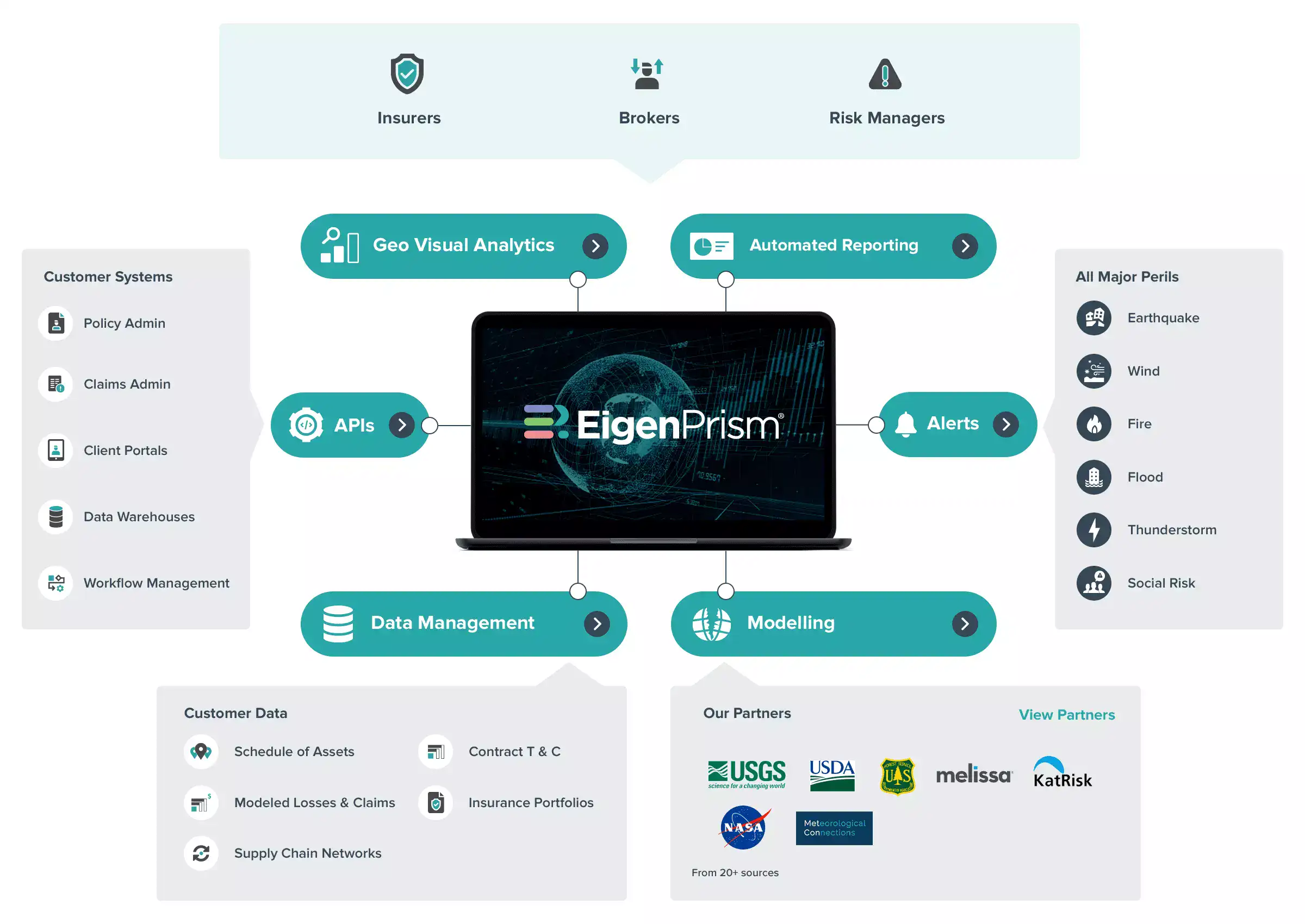
When combined with an insurer’s location, construction and value data uploaded and maintained on the EigenRisk platform Adiabat’s model facilitates early location-specific alerting that can support preparedness across different properties and portfolios.
EigenPrism enables users to adjust the damage functions for pipe freeze (as they can with other models) to tailor alerts to their needs, so they are timely, targeted and actionable. Once alert preferences are set on the system, timely messages can be received by email or accessed through the new, updated EigenRisk mobile app.
Want to learn more?
To access the webinar, click here. To learn more about EigenRisk platform, please contact us: