No Winter “Break” for Insurers, Risk Managers from Tornadoes
Despite Lower Seasonal Probabilities, Climate Conditions Drive Severe Weather
The multi-state tornadoes that struck the U.S in recent weeks were not without precedent. Only a year ago (in 2021) NOAA’s National Weather Service confirmed 66 tornadoes in the month of December alone.
Don’t ignore the risks of winter windstorms. Even though the likelihood of severe weather events in the winter months is far less than during summer, insurers and risk managers should not overlook these risks. Indeed, NOAA states the likelihood of a tornado in December is only 12-15 percent compared with 90 percent in June.
Nonetheless, eight states across the Central and Southern U.S. experienced tornadoes in December 2021 that killed more than 80 people and resulted in widespread and significant damage to residences, businesses and other properties.
The impact of climate change. According to NOAA, “… extreme heat events are now understood to be significantly influenced by the amount of human-driven greenhouse gases. Research shows that other types of extreme weather, including heavy precipitation events, storm surge, and wildfires are also being influenced by climate change.”
Given the potential for severe weather events, including tornadoes, during the winter months, the following measures can help insurers and risk managers better understand their risk and prepare, accordingly:
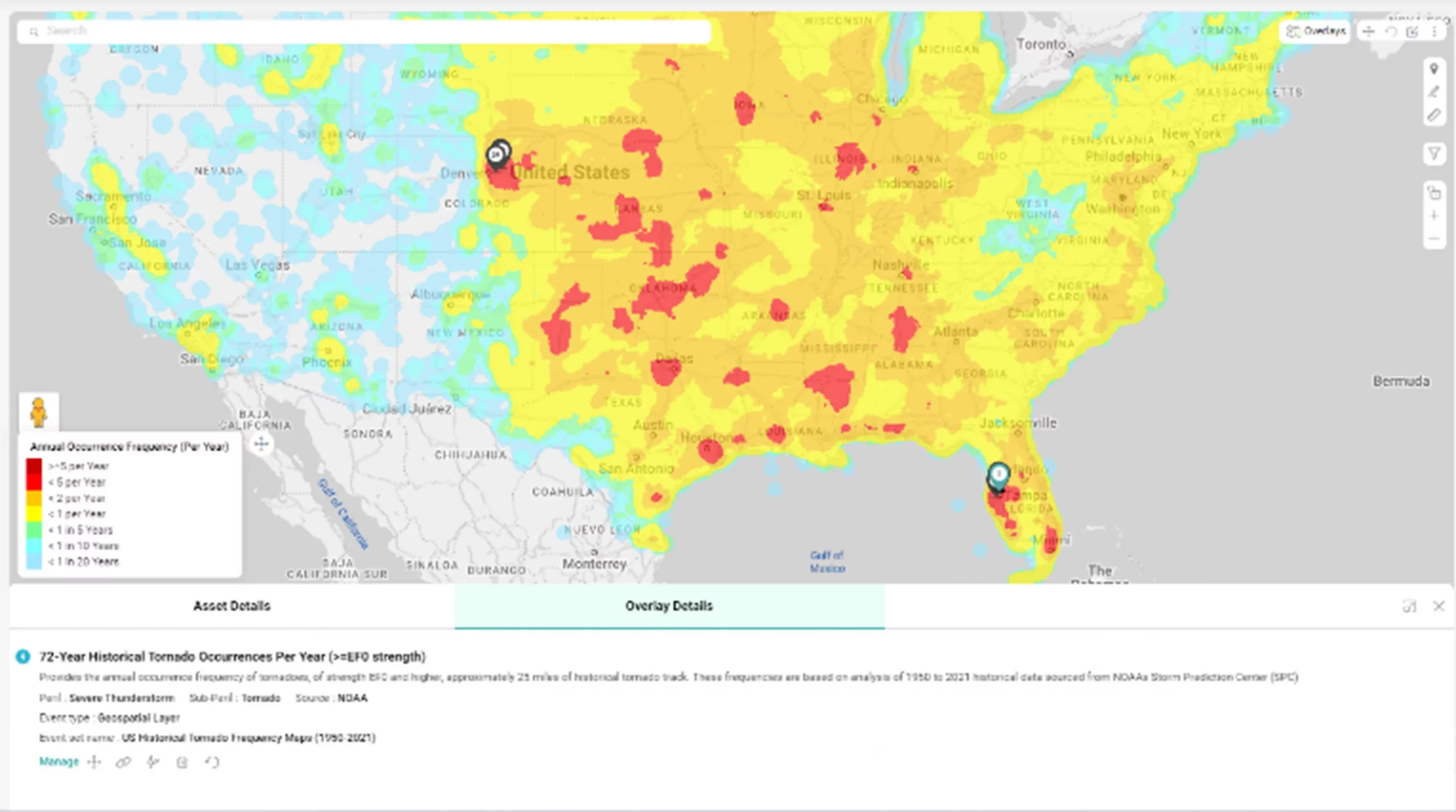
Identify your exposure to such events at a granular level. Look at historical frequency and recent trends (see map) to narrow the scope of your exposure to such events.
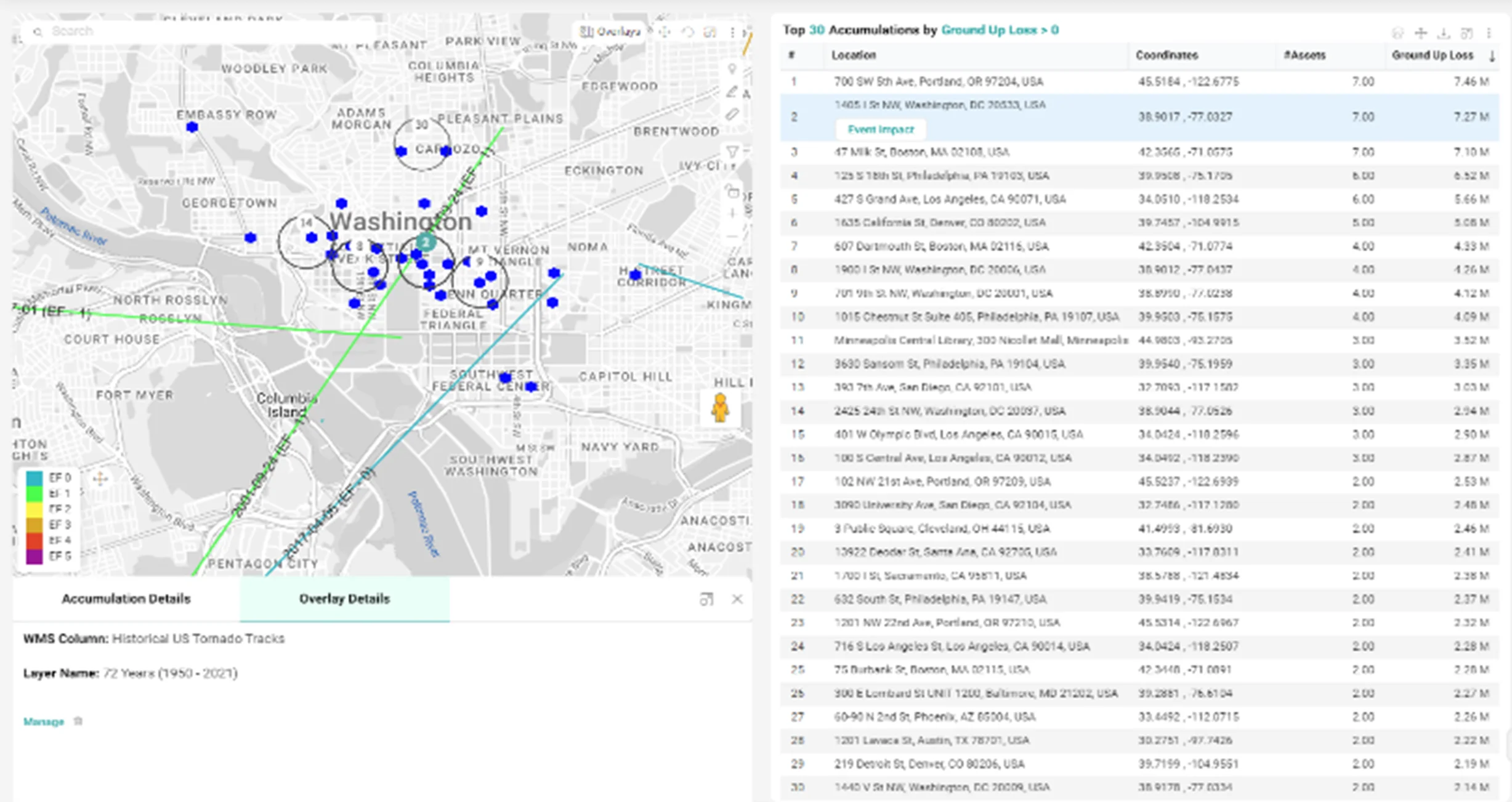
Use models and accumulation scenarios to assess impact of potential events. To avoid surprises, don’t rely on probabilistic models alone, as their results are highly sensitive to frequency assumptions. Run worst-case accumulation scenarios, including “low frequency zones”
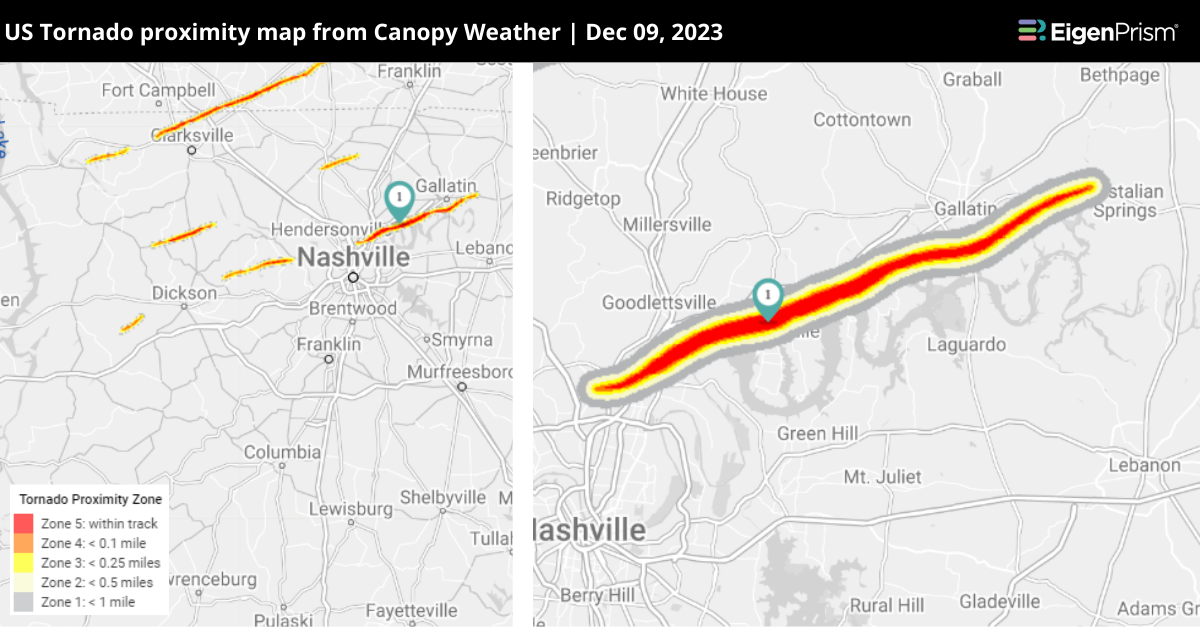
Get more accurate data faster. Be prepared to respond quickly when events do happen, particularly if they occur outside of the traditional tornado season. Note that certain modeling firms, such as Canopy Weather, can provide highly accurate footprints within minutes of events. Remember, it’s critical to get your location right. Tornado footprints are narrow; 25 yards could be the difference between 0% and 100% damage.
Save costs by leveraging automation. For insurers, while only a few policies may be affected, there’s value in knowing the impact quickly. Technology can be a difference-maker in conducting the analytics. Without automation, each event might take a full day of an analyst’s time searching for information and running manual analytics. So, your team may be spending multiple person-weeks a year assessing such events, including those that have no impact on you. That significant investment in labor can be dramatically reduced with technology-driven solutions. Furthermore, your analysts can now focus on higher value-add tasks, such as creating tighter loss estimates, instead of moving data around.
For more information on how EigenRisk can help you assess your severe weather exposures, contact us: